
FIELD NOTES
FROM THE FIRE LINE
TO THE MUSEUM
FLOOR
The fireboat David Campbell spent ninety-four years answering Portland's fires. At the Columbia River Maritime Museum, her next mission is telling the stories of her service.
By Parker Stockdale · July 2026
CLIENT
Columbia River Maritime Museum
ENGINEER OF RECORD
Crescere Marine Engineering
VESSEL
Fireboat David Campbell, 1927
LOCATION
Portland, Oregon
Her Next Chapter
Photographs and stories are meaningful; standing in the presence of what was actually there brings history to life like nothing else can. The fireboat David Campbell faithfully served Portland Fire & Rescue from 1927 until her retirement in 2021. Ninety-four years of public service earned her a legendary status among Portlanders and those who served on her decks.
A vessel with that kind of lineage deserved a home that would treat her as more than a static display. The Columbia River Maritime Museum is putting the finishing touches on the largest expansion in its history: Mariners Hall, a 24,500-square-foot addition set to open later this year, built to bring decades of vessels and artifacts into public view. It's the same instinct that's guided the museum since founder Rolf Klep established it in 1962, followed by a remodel and expansion in 2002. Subsequent expansions included the restoration of Astoria's historic train depot into the Barbey Maritime Center in 2013, and the Warnock Commons and Model Boat Pond in 2020. Each addition was built to hold more of the region's maritime history. The David Campbell is joining a tenured, world-class institution with exceptional experience preserving that history.
INTRODUCTION
VESSEL PARTICULARS
Vessel: Fireboat David Campbell
Built: 1927 · Portland, OR
Retired: 2021
Years in Service: ~94
New Home: Columbia River Maritime Museum
Engineering Weight: 122 short tons (244,000 lb)
Rigging Spread: 86' 5" overall
Named After a Portland Fire Hero
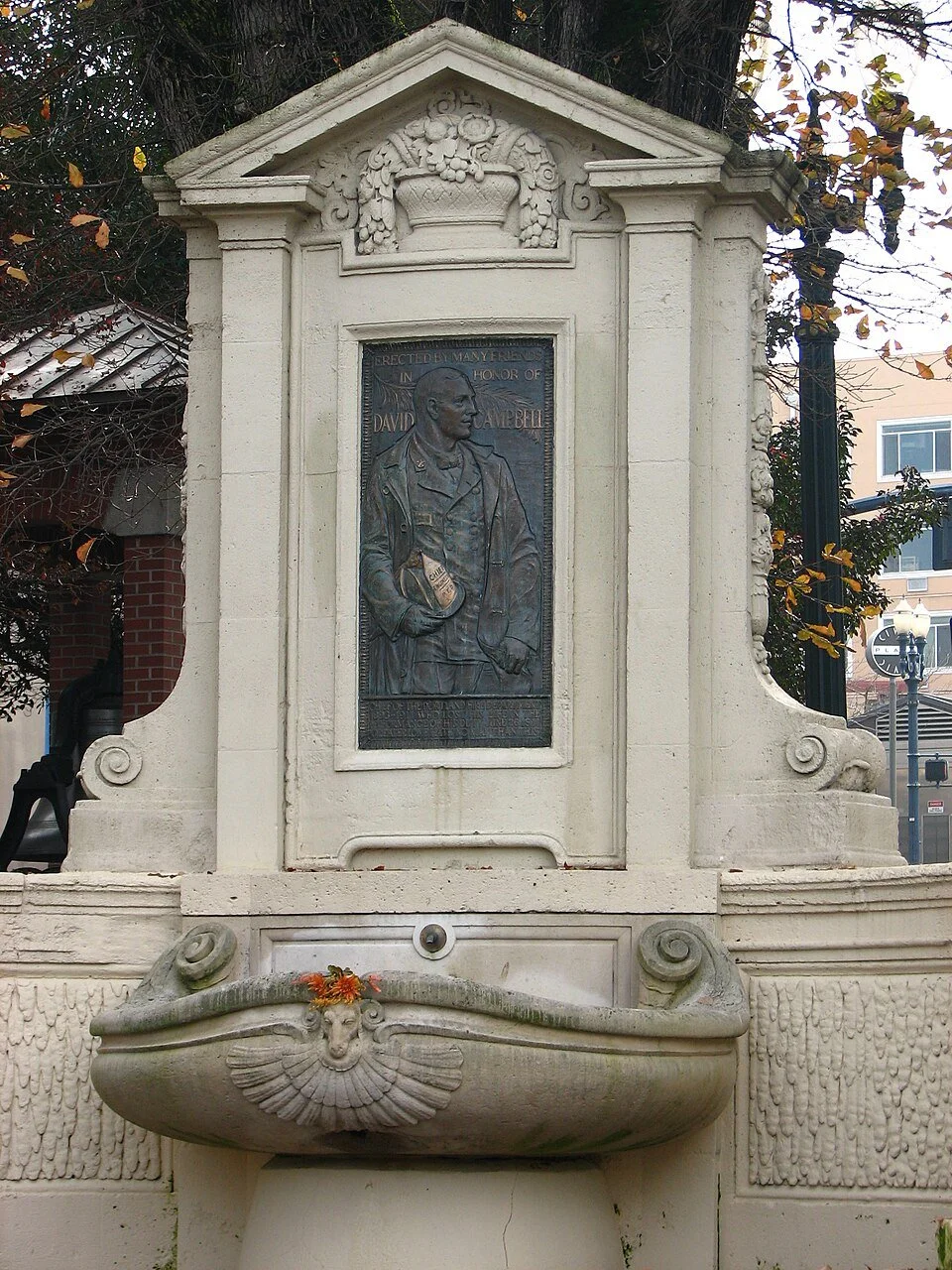
She carries the name of a local hero who made the ultimate sacrifice in the line of duty. Fire Chief David Campbell went into a burning Union Oil building himself in 1911, when a second explosion brought the roof down. Portland firefighters still hold a memorial for him every June. The fireboat launched in his name sixteen years later wasn't just named after a person; she inherited an obligation.
She did her duty. The vessel answered thousands of calls during her decades in service. Her clearest moment on the record came at a five-alarm fire at the Red Lion Hotel on the Columbia River, roughly a decade before her retirement: Portland Fire & Rescue credited her arrival with turning the fire, putting the volume of water on it that let crews finish the job from land. At her 2021 send-off, the department put it simply: generations of firefighters had watched her do exactly what she was built to do.
HER SERVICE
Getting Her From One Chapter to the Next
Before the David Campbell could move to her new home, museum personnel needed to assess the risks of preparing the vessel for the lift. Historic vessels drift from their original drawings. Insert plates, replaced equipment, multiple repowerings, and decades of sea time accumulate in ways no 1927 drawing set could anticipate, shifting the vessel's actual weight and longitudinal center of gravity (LCG) away from what the original plans showed. For a vessel about to be picked up by crane, that gap between drawing and reality is where the risk lives.
Traditional documentation methods (tape measures, photographs, field notes) capture isolated features well, but struggle to represent a hull's cumulative geometry. Establishing updated drawings and baseline data to run engineering calculations against became a clear need.
The museum brought Obsidian 3D in to build a precise, as-built digital record of the vessel's true hull form, decks, and superstructure before engineers began weight or rigging calculations. The value wasn't the technology itself; it was the data-driven results that reduced project risk and ensured a safe transition.
THE BRIDGE
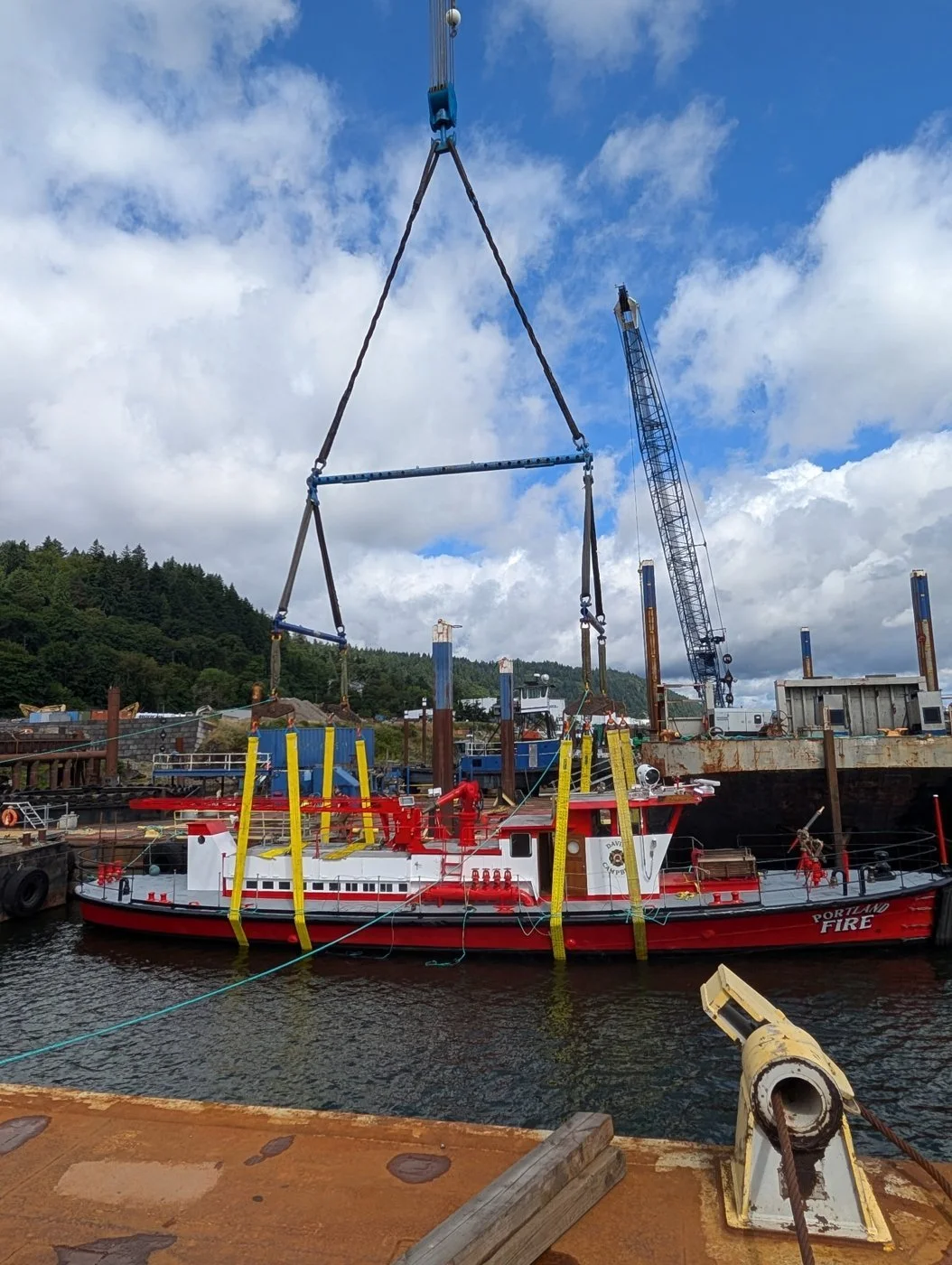
The fireboat David Campbell rigged and lifted clear of the water, the sling geometry built from our data.

Going from field scanning to an actionable deliverable happens in three key steps:
CAPTURE
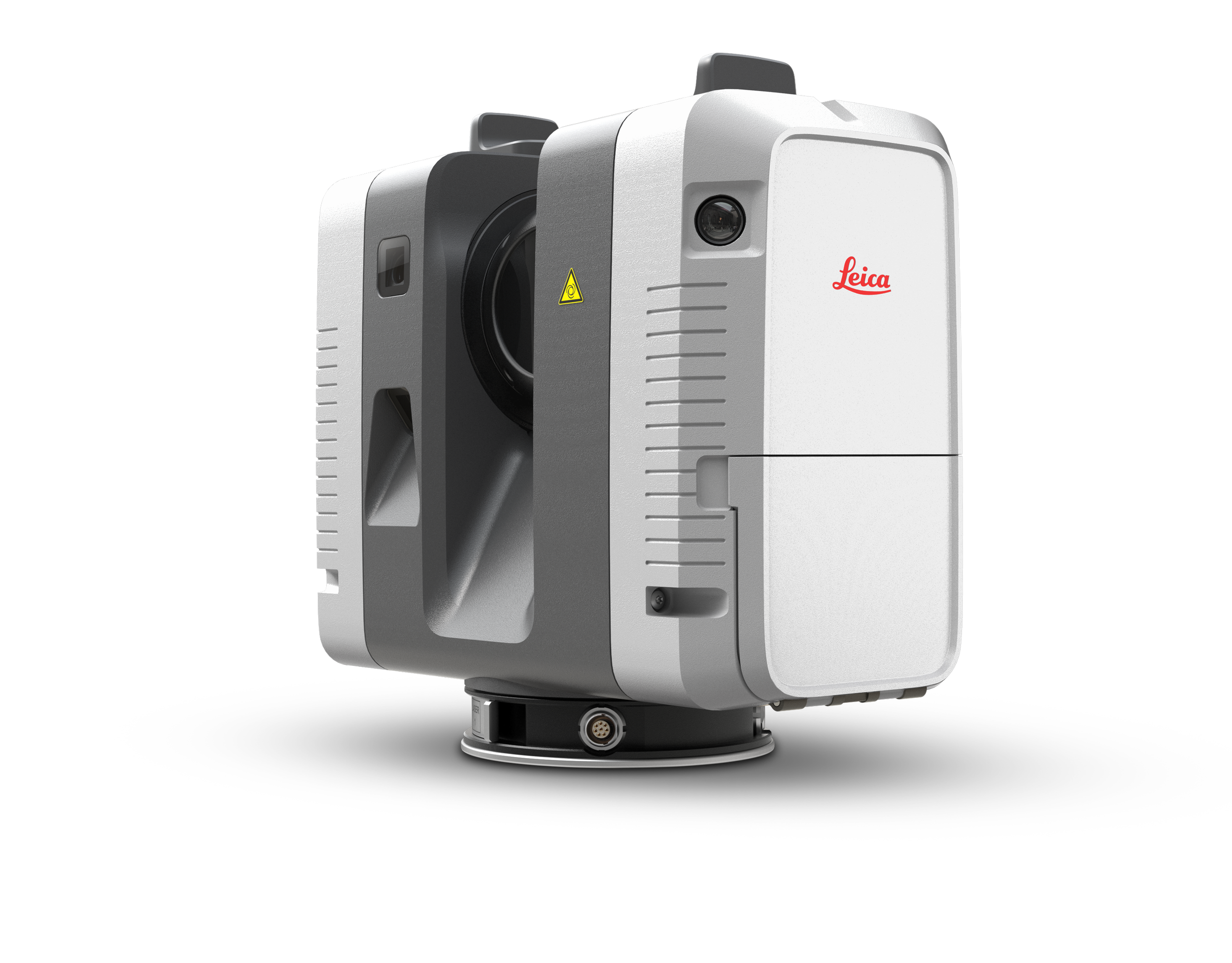
Leica RTC360
75 scan setups across the hull, decks, and interior in a single site visit
PROCESS
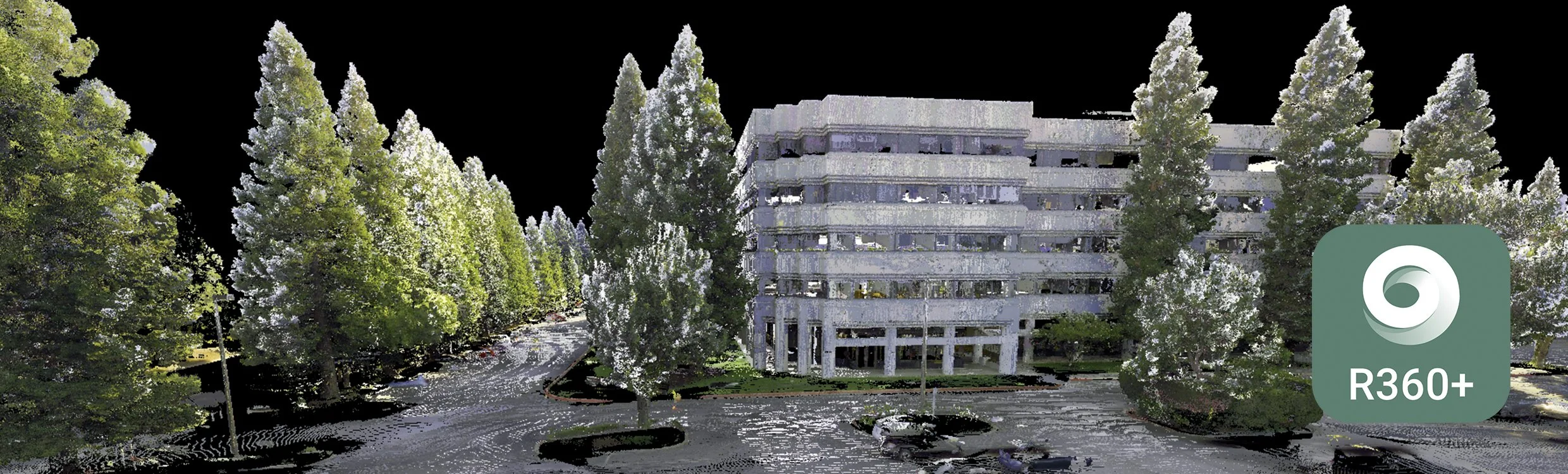
Registration & cleanup
900M+ points aligned, cleaned, and decimated to a 3mm working resolution.

DELIVER
GeoCloud + exports
Right-sized dataset published for Crescere Marine's engineers to open directly, no specialist software required.
A raw scan of the David Campbell comes back as roughly a billion individual points.
A billion individual points is a dataset too dense and a file too large to be effectively used even on a high-performance workstation. Making it usable meant registering seventy-five separate scans into one coherent model, cleaning out noise and occlusions, and decimating the cloud down to a working resolution that still held the detail Crescere Marine needed.
The goal of that processing step was a dataset tailored to answer critical engineering questions.

“The scan data was perfect. The vessel's actual weight was within a few hundred pounds.”
Doug Taylor, Project Manager, Columbia River Maritime Museum
Crescere Marine's engineering weight of 122 short tons (244,000 lb) was built directly on Obsidian 3D's scan data,
accurate to within a few hundred pounds (±0.1% of total weight).
From Point Cloud to Lift Plan
With a verified existing-conditions model in hand, Crescere Marine Engineering designed the crane picking plan and rigging arrangement used to lift the David Campbell clear of the water.
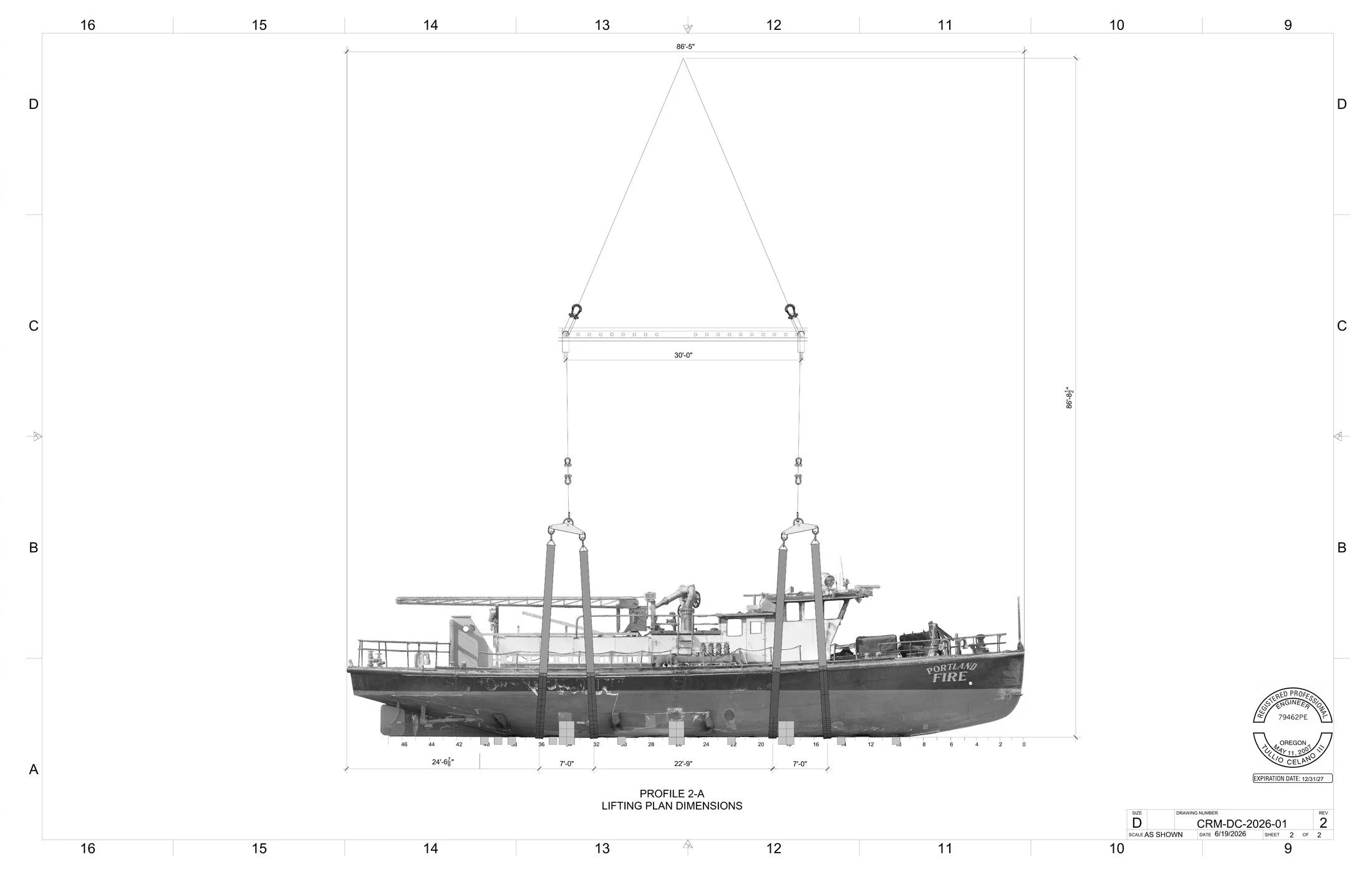
The final rigging plan called for an 86-foot, 5-inch overall spread using dual 30-foot braided slings rated to 216 tons each, engineered and stamped by a registered professional engineer under ANSI B30.8 / B30.5 standards. None of it would have been possible to specify with confidence from the vessel's original 1927 drawings alone.
Point cloud software is not built for a museum project manager or a fire-rescue crew to pick up and use: it's specialized, and the learning curve is real. That's why the deliverable matters as much as the capture. Obsidian 3D shaped the raw scan into a dataset Crescere Marine's engineers could open and use immediately, then stayed on as a resource for the museum team, translating the data as new questions came up rather than handing over a file and a login.
THE ENGINEERING HANDOFF
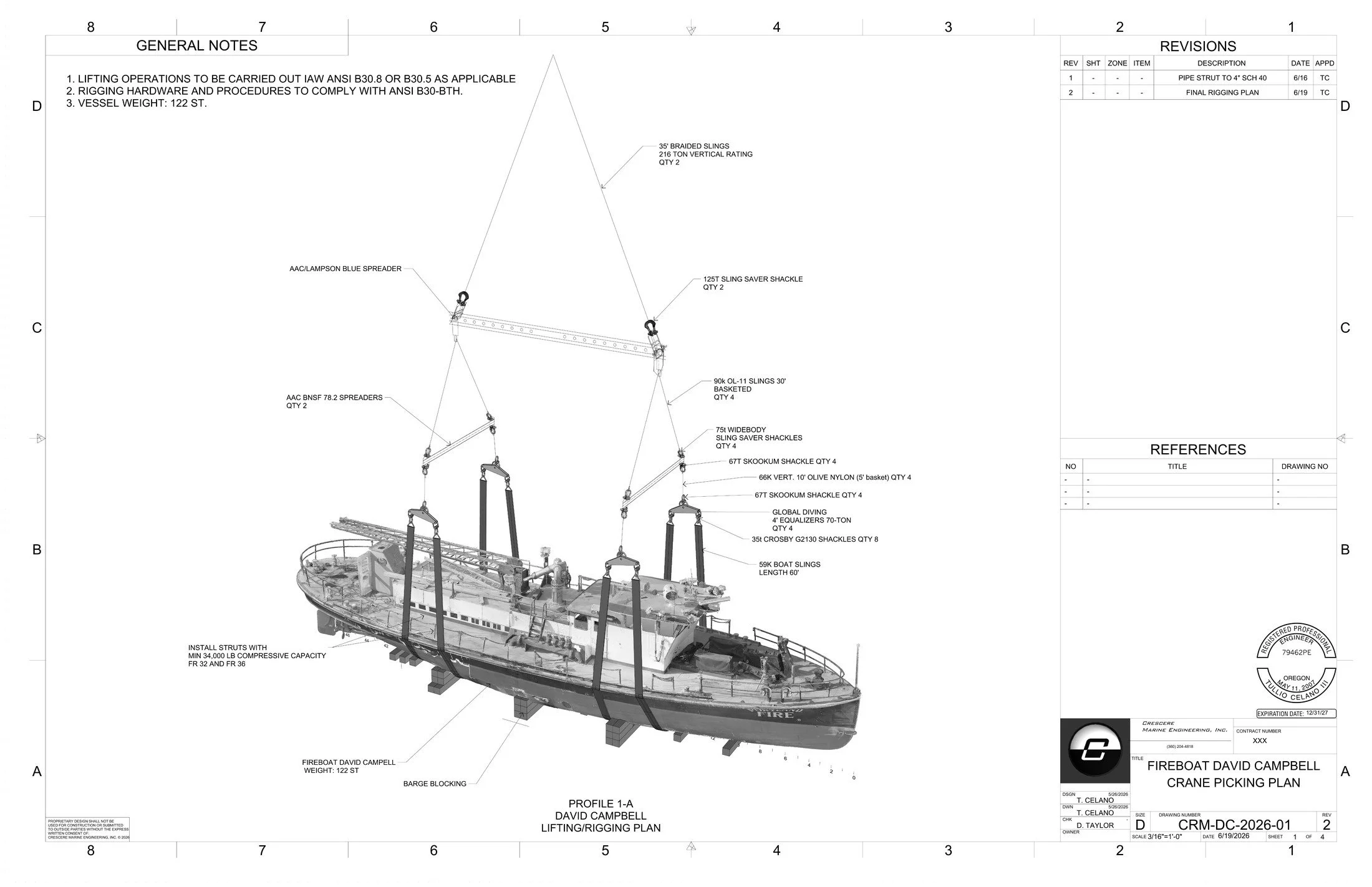
Crane picking plan: spreader bar and sling arrangement, built directly on Obsidian 3D's scan geometry.
Lifting plan dimensions: 86' 5" overall rigging height, verified against the registered point cloud.
In July 2026, the lift went as planned. The crane took her weight, the slings landed on their calculated points, and she came down inside the museum's exhibit pit. The David Campbell is now on permanent display at the Columbia River Maritime Museum. Obsidian 3D was glad to have played a small part in getting her there safely.
Talk to Our Team
Want to know if Obsidian 3D is the right fit for your project? Reach out and we'll follow up within one business day.
GET IN TOUCH